If you provide professional advice, services, expertise, technology, or another service that a customer relies on, there is a question I want you to think about:
What exactly are you being paid to be responsible for?
I ask that question because professional liability risk can look very different from the risks most business owners immediately associate with insurance. You do not necessarily have to injure someone or physically damage their property to create a serious financial problem.
Sometimes the allegation is much simpler: You made a mistake, and your client believes that mistake cost them money.
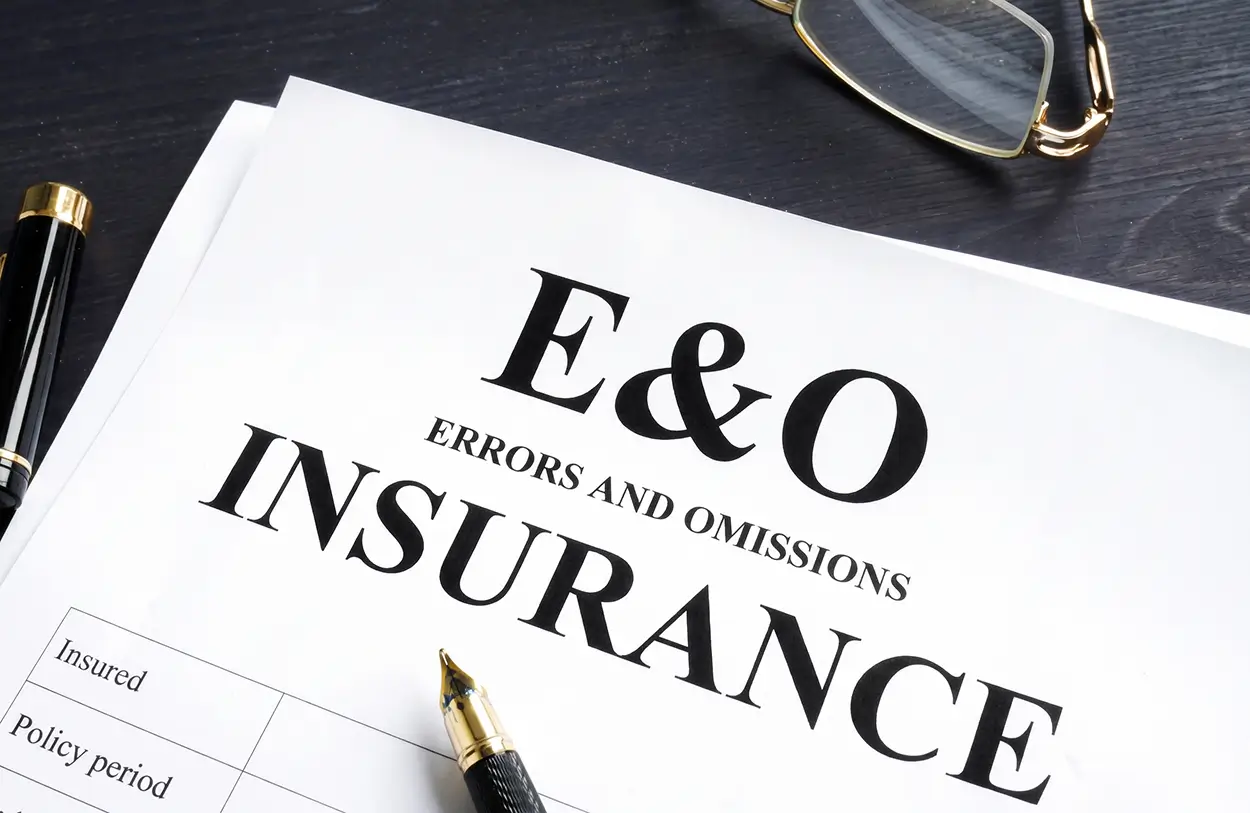
That is where Errors & Omissions Insurance, often referred to as E&O Insurance or Professional Liability Insurance, becomes an important part of the conversation.
At The Koch Insurance Group, I do not want to start by asking whether you have an E&O policy. I want to understand what your business actually does, what your customers rely on you to do, and what could happen financially if something goes wrong.
Because having an E&O policy and having an E&O policy that actually aligns with your business are not necessarily the same thing.
What Is Errors & Omissions Insurance?
Errors & Omissions Insurance is designed to address certain claims arising from alleged errors, omissions, mistakes, or failures in professional services, subject to the terms, conditions, exclusions, and limits of the particular policy.
The Texas Department of Insurance describes Professional Liability Insurance as coverage that can help protect businesses from claims for damages arising from providing or failing to provide professional services. It may also help with legal expenses, settlements, and judgments associated with covered claims.
Think about a technology company as an example. Maybe you develop or implement software for another business and something goes wrong. The system becomes unavailable for several days while the problem is identified and corrected. During that time, your customer loses sales, cannot provide services, misses an opportunity to pursue a major contract, or loses customers because the system they depend on is unavailable.
Now the customer believes your professional service caused a financial loss.
Whether you actually made the mistake is another question. A client can still allege that your company is responsible, and responding to that allegation can cost money even if you ultimately believe you did nothing wrong.
A Professional Mistake Does Not Have to Cause Physical Damage
This is an important distinction when we talk about Professional Liability.
Imagine an IT company is responsible for maintaining a customer’s systems and backups. A configuration error occurs, the backup does not perform as expected, and important business data is lost.
Nobody was physically injured. The customer’s building was not damaged.
But the customer may have suffered a significant financial loss.
That is the kind of exposure I want to understand when reviewing E&O Insurance. What professional service are you providing? What is the customer relying on you to do? What could happen to that customer if you make a mistake?
I can actually use my own business as an example.
Years ago, I hired an IT professional to build a server for my company. I am an insurance guy, not an IT guy, so I relied on someone who understood the technology better than I did.
My understanding was that the server would have redundant hard drives. If one drive failed, I expected the data to exist somewhere else. When we eventually had a major drive failure, the redundancy was not configured the way I understood it to be.
I lost essentially all of my business data from before roughly 2010.
My business was much smaller at the time, but imagine that same situation happening to an established company that has been operating for 20 years. What happens if years of business records disappear? What happens if the company cannot operate normally? What if the data cannot be recovered and the business relied on its technology provider to make sure the proper backups and redundancies were in place?
The mistake itself might seem relatively simple.
The financial consequences might not be.
What Happens When a Client Says Your Mistake Cost Them $100,000?
Let’s say a client believes your professional mistake caused $80,000 in financial loss. Maybe the client also had to hire another professional to correct the problem, bringing the total demand to $100,000.
Now you receive a demand letter.
What do you do?
This is where understanding the actual E&O policy becomes extremely important. Many Professional Liability policies are written on a claims-made basis, which makes the timing of a claim and when it is reported particularly important.
Policies can contain specific requirements governing what constitutes a claim, when notice must be provided, and how claims or circumstances that could potentially develop into claims should be reported.
That means receiving a demand letter and deciding to handle everything yourself before telling anyone about it may create problems.
If you receive a demand, lawsuit, or become aware of circumstances that could potentially lead to an E&O claim, I would not assume you should try to resolve everything first and notify the insurer later. Read the policy and contact your insurance professional so you understand the applicable reporting requirements.
Depending on the policy, facts, and coverage involved, the insurer may then become involved in evaluating and defending the claim.
That defense can be an important part of what you purchased.
Sometimes the Defense Is Just as Important as the Damages
Suppose your client demands $100,000 from your company, but you believe they are wrong.
You believe your work was performed correctly and something else caused the problem.
You may ultimately be right, but you may still need an attorney to defend the company. Documents may need to be reviewed, allegations investigated, and a formal response prepared. If the dispute becomes a lawsuit, those expenses can continue increasing even before anyone determines who was actually responsible.
Professional Liability policies may provide for the investigation and defense of covered claims, but how defense is handled can vary by policy. Defense expenses, policy limits, retentions or deductibles, consent provisions, and the responsibilities of the insurer and insured are all things that deserve attention.
That is why I do not like making blanket statements about what every E&O policy will do.
We need to read the policy.
The important point is that your potential financial exposure is not necessarily limited to whatever amount the customer is demanding. The cost of responding to and defending the allegation can matter too.
Errors & Omissions Insurance Is for Professional Mistakes, Not Intentional Wrongdoing
There is also a significant difference between making a professional mistake and intentionally doing something wrong.
If you configure a system incorrectly, omit something from your professional work, make an error in a calculation, or provide a service that unexpectedly fails, we may be dealing with an alleged error or omission.
If someone intentionally steals $80,000 from a customer, that is a completely different situation.
I sometimes explain it very simply: putting a dot where a comma should have been is a mistake. Intentionally stealing the client’s money is not.
Professional Liability policies contain exclusions and conditions, and intentional, dishonest, fraudulent, or criminal conduct may be treated very differently from an alleged professional error.
That is another reason I do not like telling someone, “Don’t worry, you’re covered,” without understanding what happened and reviewing the actual insurance involved.
Insurance is not that simple.
Having E&O Insurance Does Not Mean Everything You Do Is Covered
This may be the most important point in this entire conversation.
I worked with a professional-services business that had a complicated operation. The company was involved in financial services, technology, investment-related activities, and other professional services.
The owners wanted to make sure they were insured correctly.
They already had insurance. In fact, they had tried to address their different exposures by piecing together multiple policies. On the surface, it looked like they had made an effort to insure the different parts of the company.
Then we started looking at what the business actually did and comparing those activities with the insurance policies.
We found a significant problem.
One of the company’s primary revenue-generating activities was specifically excluded.
They had insurance. They had paid premiums. They believed they had attempted to address the different professional exposures within the business.
But a major part of what they were being paid to do did not line up with the protection they thought they had.
That is why asking, “Do you have Professional Liability Insurance?” does not tell me enough.
I want to know what you ACTUALLY do.
Why the Definition of Your Professional Services Matters
One of the things I want to understand when reviewing an E&O policy is how the professional services being insured align with what the company actually provides to its customers.
A business can change significantly over time. Maybe you started as a consultant and now provide additional technology services. Perhaps you began by installing software but now manage customer systems. Maybe you added implementation, advisory, management, design, or another professional service that was not part of the original operation.
Those changes deserve a conversation.
The name of your company does not tell me everything I need to know about your exposure. Neither does a broad description such as “consultant.”
I want to understand what you actually do for your customers and what they rely on you to be responsible for. Then we can compare those operations with the policy instead of assuming the insurance automatically kept up as the business changed.
“My Agent Says It’s Covered”
This came up in the professional-services example I just described.
The business believed its existing insurance covered the exposure because they had been told it did.
My response was essentially:
What does the policy say?
Your insurance policy is a contract. We have to look at what that contract actually says it will and will not do.
If a major part of your operation is specifically excluded, I would not want to rely solely on an assumption that coverage exists because somebody verbally said it was there.
In this particular situation, I spent considerable time understanding the company’s operations and putting together a program I believed better aligned with the exposures we identified. That program was approximately 20% more than what the company had been paying.
That does not mean better insurance always costs 20% more. It certainly does not mean the more expensive policy is automatically the better policy.
The point is that we were no longer comparing the same thing.
One program contained a significant exclusion affecting an important part of the company’s operation, while the other was structured differently around the exposures we had identified.
Price matters. But before we compare price, we need to understand what we are actually comparing.
Your Premium Is Not Your Only Cost
Business owners should care about insurance premiums. Nobody wants to pay more for insurance than necessary.
But your premium is not your only potential cost when something goes wrong.
What happens if a serious allegation falls outside the coverage you purchased? What does it cost to hire your own attorney? What could a judgment or settlement mean to the business? What happens to your reputation, customer relationships, and ability to continue operating while a major professional dispute is being resolved?
Those are part of the risk conversation too.
When we compare E&O programs, I want to understand what professional services are contemplated, what exclusions apply, what limits have been purchased, how defense is addressed, what reporting requirements exist, and whether the insurance reasonably aligns with the services generating the company’s revenue.
Saving money on premium is important.
Understanding what you are giving up to achieve that savings is important too.
What Exactly Are You Being Paid to Be Responsible For?
Before I start talking about which Professional Liability policy you need, I want to understand something much more basic:
What exactly are your customers paying you to be responsible for?
Do you provide professional advice? Do you design something? Manage money? Develop software? Maintain technology? Make recommendations? Implement systems? Perform consulting services? Handle sensitive information?
Then we need to understand what could happen if you make a professional mistake while performing those services.
What could your customer lose? How large are your customers? What responsibilities have you accepted in your contracts? What does your insurance say about the professional services being insured? Are there exclusions that could affect something important to the business?
Those questions tell me considerably more than the name printed at the top of an insurance policy.
Don’t Give the Insurance Company a Reason to Deny the Claim
I have said this before, and I will keep saying it:
Don’t give the insurance company a reason to deny a claim. Let’s get it right.
For me, getting it right starts with accurately explaining what your business does.
Do not simply describe yourself as a consultant if you actually provide five different professional services. Do not leave out a major revenue-producing activity because explaining it makes the application more complicated. Do not assume a generic E&O policy automatically covers everything your company offers.
Tell us what you do. Let us ask questions. Let us look at the contracts and the policies.
Then we can compare the business’s actual operations with the insurance program and identify areas that deserve a closer look.
Sometimes getting it right may cost more. Sometimes it may not.
We will not know until we actually understand the business.
Does Your Errors & Omissions Insurance Match What You Actually Do?
At The Koch Insurance Group, our approach to Errors & Omissions Insurance and Professional Liability Insurance starts with understanding the business before recommending the insurance.
We work with small to mid-sized businesses throughout Houston, Spring, The Woodlands, Conroe, Magnolia, Tomball, Montgomery County, and across Texas, including companies providing professional, consulting, technology, and other specialized services.
If you currently carry Errors & Omissions Insurance, I would encourage you to ask something more useful than:
“Do I have E&O?”
Ask:
“Does my E&O policy actually align with what my customers are paying me to do?”
If you are not sure, contact The Koch Insurance Group. We can take the time to understand your operation, review the professional services you provide, look at your current insurance and contractual requirements, and help you understand where the program may deserve a closer look.
The goal is to help you understand where your coverage stands before the demand letter arrives.