Over the years, I have received calls about some pretty unusual businesses.
One of the more memorable ones involved a mobile petting zoo.
The owner was starting the business from scratch and planned to bring animals directly to homes, events, and private gatherings. On its own, that is not necessarily an unusual insurance conversation.
Then he told me about the main attraction.
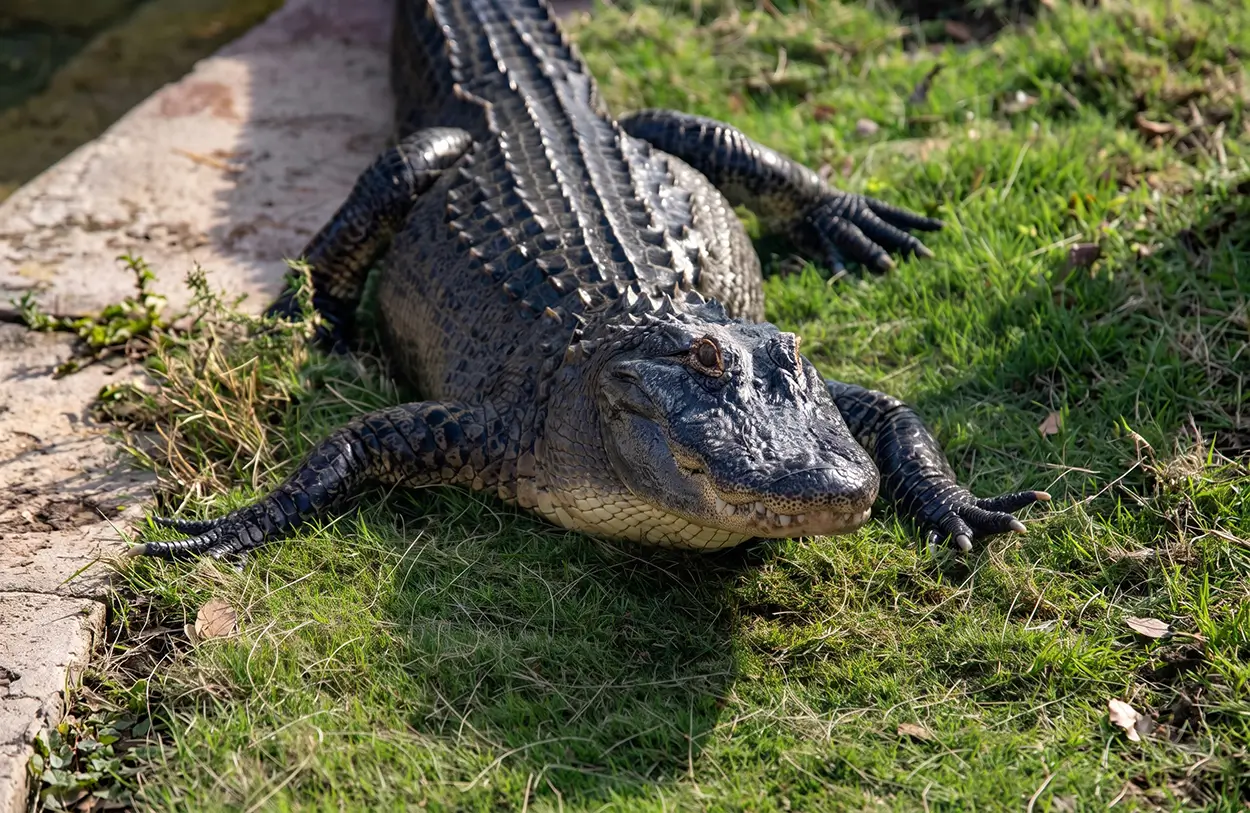
A roughly 12-foot alligator.
At that point, the conversation changed.
The idea itself was creative. It was memorable, different, and probably something people would talk about. From a business standpoint, I understood exactly why he thought it could work.
From an insurance standpoint, however, the risk looked very different.
That is the part of starting a business that people do not always think about. A good idea and an insurable idea are not always the same thing.
Why Some Business Risks Are Harder to Insure
Commercial insurance is built around risk. The more serious the potential loss, the more carefully an insurance company is going to evaluate the operation.
A mobile petting zoo already creates several areas of exposure. You have members of the public interacting with animals, animals being transported between locations, children potentially involved, and a business operating on property it does not own.
Add a large alligator into the mix and the severity of a potential claim increases significantly.
The question is no longer just whether someone could slip and fall near the exhibit. The insurance company also has to consider what could happen if the animal injures someone.
That distinction matters.
At The Koch Insurance Group, we regularly work with small to mid-sized businesses that have unusual operations, complex contract requirements, or risks that do not fit neatly into a standard insurance program. Our role is to dig into those details and help the business owner understand what is actually possible.
We Found Coverage, But There Was an Important Exclusion
In this particular case, I was able to find insurance for the mobile petting zoo.
There was a catch.
The policy included an animal bite exclusion.
In practical terms, the business had liability protection for certain types of claims, such as a customer slipping and falling, but the policy would not provide the same protection for an injury caused by the animal under that exclusion.
That is a very important difference.
The owner technically had insurance, but that did not mean every risk associated with the business was covered.
This is exactly why I tell business owners never to assume that having a policy automatically means every part of the operation is protected.
You need to understand the exclusions and the limitations.
Most importantly, you need to understand whether the biggest risk in your business is actually one of the things the policy is designed to cover.
Insurable Does Not Always Mean Affordable
There is another side to this conversation that matters just as much.
Almost any risk can potentially be insured somewhere if enough premium is available and the right specialty market is willing to consider it.
The problem is whether that insurance makes financial sense for the business.
If a company expects to generate less than $100,000 in annual revenue but the insurance needed to fully address a major exposure costs an amount the company cannot realistically absorb, the issue becomes less about whether coverage technically exists and more about whether the business model can support it.
That is a difficult conversation, but it is an important one.
Sometimes a business owner has a great idea, but the cost of transferring the risk makes the operation economically unrealistic.
That does not mean the idea is bad.
It means the risk needs to be understood before significant money is invested.
High-Risk Business Insurance Requires More Questions
Businesses with unusual exposures cannot be handled with a generic application and a quick quote.
We have to understand exactly what is happening.
For a business like a mobile petting zoo, some of the questions could include:
- What types of animals are involved?
- Are customers allowed to touch or handle them?
- Are children participating?
- How are the animals transported?
- Who is responsible for handling them?
- What safety procedures are in place?
- Where will the business operate?
- Are events held at private homes, schools, churches, or public venues?
- What contracts or waivers are being used?
- What exclusions are included in the policy?
Those details affect how an insurance company evaluates the risk.
The same principle applies well beyond petting zoos. Contractors, entertainment businesses, event companies, mobile businesses, specialty service providers, and other unusual operations can all run into situations where standard commercial insurance is not enough.
KIG’s brand is built around taking a detailed, intentional approach to coverage, including high-risk and complex coverage solutions, coverage gap analysis, policy reviews, and contract alignment.
The Biggest Risk Is Assuming You Are Covered
One of the most dangerous assumptions a business owner can make is, “I have insurance, so I am covered.”
That statement is incomplete.
The better questions are:
What am I covered for?
What am I not covered for?
What exclusions apply?
Are the risks most likely to hurt my business actually addressed?
If something serious happens tomorrow, how will this policy respond?
Those questions are far more important than simply knowing the premium.
This mobile petting zoo is a perfect example. The policy existed, but a major part of the operation created an exposure the policy excluded.
If the owner had never understood that distinction, he could have operated under the assumption that the business was fully protected when it was not.
Sometimes the Best Advice Is to Change the Plan
Insurance advisors should not be afraid to tell a business owner when something does not make sense.
Sometimes the answer is, “Yes, we can structure coverage for this.”
Sometimes the answer is, “We can cover part of the risk, but you need to understand this exclusion.”
Other times, the answer may be, “This can technically be insured, but the cost may not make sense for the amount of revenue the business expects to generate.”
That is not selling.
That is advising.
At The Koch Insurance Group, we believe our responsibility is to help business owners make informed decisions about risk. Adam’s approach has always been centered on effort, ethics, integrity, clear communication, and helping clients understand how their insurance aligns with real-world operations.
What New Business Owners Can Learn From This Story
If you are starting a business with an unusual concept, do not wait until everything is purchased, built, booked, or advertised before talking to an insurance advisor.
Have that conversation early.
A good insurance review can help you understand whether your operation is insurable, what exclusions may apply, how much coverage could cost, and whether your business model can realistically support that expense.
That can save a tremendous amount of time and money later.
It is much easier to adjust an idea before you invest heavily than to discover afterward that the coverage you need is unavailable or financially unrealistic.
Complex Commercial Insurance in Texas Requires the Right Conversation
The Koch Insurance Group works with small to mid-sized businesses throughout Houston, Spring, The Woodlands, Conroe, Magnolia, Tomball, Montgomery County, and across Texas. We also work with businesses that have more complex or unusual coverage needs and can evaluate multi-state requirements as operations expand.
We do not believe every business should be forced into a standard insurance box. We believe the right starting point is understanding the operation, evaluating the real-world exposure, and giving the business owner enough information to make a smart decision.
If you are starting a new business, adding an unusual service, planning an event, or operating in a higher-risk industry, contact The Koch Insurance Group before making assumptions about what can be insured. We can review the operation, discuss the potential exposure, and help you understand what options may be available.
Because a creative business idea can absolutely be worth pursuing.
You just need to understand the risk that comes with it.